
Glacier Monitoring
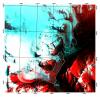
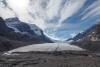
"Despite typical glaciers’ massive sizes, monitoring them is not always an easy task. Only specific types of small glaciers are good measures of climate change. Some glaciers are too large to measure accurately, and others are simply too unpredictable. Once scientists find a suitable glacier, they must take satellite images of the ice for a minimum of five years and compare the results. They then have to look closely at the outside edge of the glacier (the glacier’s terminus). If a large percentage of the glacier’s edge is receding then the area around the ice is growing warmer, and if a large percentage is expanding then the area is growing cooler. When enough measurements from many different parts of the world have been gathered, the researchers can determine whether the earth is growing warmer or cooler" (NASA, 2018)
NASA. (2018) At the Edge: Monitoring Glaciers to Watch Global Change. https://earthobservatory.nasa.gov/Features/Glaciers
Related Content
Article
A hidden secret that becomes water: Monitoring Patagonian Glacier Retreat
It was not long ago, in 1916, that the explorer Padre De Agostini surveyed part of the topography of the Escondidos glaciers (“hidden glaciers”, in English) in Patagonia (De Agostini, 1949). Today, space technology such as NASA’s ICESat Missions and Shuttle Radar Topography Mission (SRTM) data, allow to monitor changes in glaciers over time.
Un secreto oculto que se convierte en agua: el seguimiento del receso de los glaciares patagónicos
Translated by: Isabel Zetina
No hace mucho, en 1916, el explorador Padre De Agostini inspeccionó parte de la topografía de los glaciares Escondidos de la Patagonia (De Agostini, 1949). Hoy en día, la tecnología espacial, como las misiones ICESat de la NASA y los datos de la Shuttle Radar Topography Mission (SRTM), permiten seguir los cambios de los glaciares a lo largo del tiempo.
Un secreto oculto que se convierte en agua: el seguimiento del receso de los glaciares patagónicos
Translated by: Isabel Zetina
No hace mucho, en 1916, el explorador Padre De Agostini inspeccionó parte de la topografía de los glaciares Escondidos de la Patagonia (De Agostini, 1949). Hoy en día, la tecnología espacial, como las misiones ICESat de la NASA y los datos de la Shuttle Radar Topography Mission (SRTM), permiten seguir los cambios de los glaciares a lo largo del tiempo.
A hidden secret that becomes water: Monitoring Patagonian Glacier Retreat
It was not long ago, in 1916, that the explorer Padre De Agostini surveyed part of the topography of the Escondidos glaciers (“hidden glaciers”, in English) in Patagonia (De Agostini, 1949). Today, space technology such as NASA’s ICESat Missions and Shuttle Radar Topography Mission (SRTM) data, allow to monitor changes in glaciers over time.
Un secreto oculto que se convierte en agua: el seguimiento del receso de los glaciares patagónicos
Translated by: Isabel Zetina
No hace mucho, en 1916, el explorador Padre De Agostini inspeccionó parte de la topografía de los glaciares Escondidos de la Patagonia (De Agostini, 1949). Hoy en día, la tecnología espacial, como las misiones ICESat de la NASA y los datos de la Shuttle Radar Topography Mission (SRTM), permiten seguir los cambios de los glaciares a lo largo del tiempo.
A hidden secret that becomes water: Monitoring Patagonian Glacier Retreat
It was not long ago, in 1916, that the explorer Padre De Agostini surveyed part of the topography of the Escondidos glaciers (“hidden glaciers”, in English) in Patagonia (De Agostini, 1949). Today, space technology such as NASA’s ICESat Missions and Shuttle Radar Topography Mission (SRTM) data, allow to monitor changes in glaciers over time.
Event
United Nations/Costa Rica/PSIPW - Sixth conference on the use of space technology for water management
San José, Costa Rica, 7-10 May 2024 (with a possibility of online attendance) - streaming in UTC-8 time zone.
Hosted and supported by the Inter-American Institute for Cooperation on Agriculture (IICA)
Co-sponsored by the Prince Sultan Bin Abdulaziz International Prize for Water (PSIPW)
Local Perspectives Case Studies
Stakeholder
Person
Ailin Sol Ortone Lois
Director Grupo de Radar de Apertura Sintética of Universidad Tecnológica Nacional Facultad Regional Haedo
Ailin Ortone holds the Director position within the Synthetic Aperture Radar research group, a role she adeptly manages alongside her responsibilities as a teacher at Universidad Tecnológica Nacional - Haedo. Her expertise extends to her role as a researcher at the Remote Sensing Centre of the Argentine National Air Force, where she actively contributes to advancing knowledge in the field. Additionally, she shares her wealth of knowledge and experience as a teacher at Universidad Nacional de Luján, nurturing the next generation of professionals in the field.