
Water scarcity and drought

Related Content

Article

Interview with Pankaj Kumar, Associate Professor, G.B. Pant University of Agriculture and Technology

Dr. Pankaj Kumar’s personal experience with water scarcity in the Kumaon Himalayas shaped his lifelong commitment to understanding and protecting water resources. This early connection now underpins his work as an Associate Professor at G.B. Pant University of Agriculture and Technology, where he teaches and conducts research in hydrological modeling, watershed management, and geoinformatics, while also engaging directly with farming communities through extension activities. Throughout the interview, he emphasizes how space technologies have transformed watershed science – shifting from labor-intensive surveys to rapid, comprehensive satellite-based observations that reveal land cover, soil moisture, vegetation health, and hydrological processes in near real time. His contribution to the UNEP-TEEB Agri-Food project in Uttarakhand, where he worked on ecosystem services and sustainable agriculture, stands out as a particularly meaningful part of his career. Dr. Kumar highlights India’s complex water challenges, shaped by monsoon dependency, groundwater decline, and pollution, and explains how Indian satellite missions and geoportals are increasingly supporting integrated water management. He also stresses the urgency of monitoring the Himalayas, where accelerated glacier melt threatens long-term water security for the region. Integrating machine learning with geospatial data, he works to improve forecasting, assess ecosystem services, and guide more resilient water-planning decisions. He concludes by reflecting on his favourite form of water – snow – which he sees as both a symbol of natural beauty and a reminder of the importance of protecting the glaciers that sustain life in the Himalayas.

A global eye on water: What the SWOT mission reveals about Earth’s water

From Nile floods to satellites: Humanity’s long quest to measure water

For as long as people have lived near rivers and seas, we have watched the water, measured it and tried to understand it because our survival depended on it. In fact, ancient Egyptians built nilometers along the Nile more than 5,000 years ago to predict floods while in China early engineers estimated the speed of rivers with floating objects. In Europe thinkers like Leonardo da Vinci designed new ways to track river flow.

Interview with Pankaj Kumar, Associate Professor, G.B. Pant University of Agriculture and Technology

Dr. Pankaj Kumar’s personal experience with water scarcity in the Kumaon Himalayas shaped his lifelong commitment to understanding and protecting water resources. This early connection now underpins his work as an Associate Professor at G.B. Pant University of Agriculture and Technology, where he teaches and conducts research in hydrological modeling, watershed management, and geoinformatics, while also engaging directly with farming communities through extension activities. Throughout the interview, he emphasizes how space technologies have transformed watershed science – shifting from labor-intensive surveys to rapid, comprehensive satellite-based observations that reveal land cover, soil moisture, vegetation health, and hydrological processes in near real time. His contribution to the UNEP-TEEB Agri-Food project in Uttarakhand, where he worked on ecosystem services and sustainable agriculture, stands out as a particularly meaningful part of his career. Dr. Kumar highlights India’s complex water challenges, shaped by monsoon dependency, groundwater decline, and pollution, and explains how Indian satellite missions and geoportals are increasingly supporting integrated water management. He also stresses the urgency of monitoring the Himalayas, where accelerated glacier melt threatens long-term water security for the region. Integrating machine learning with geospatial data, he works to improve forecasting, assess ecosystem services, and guide more resilient water-planning decisions. He concludes by reflecting on his favourite form of water – snow – which he sees as both a symbol of natural beauty and a reminder of the importance of protecting the glaciers that sustain life in the Himalayas.

Landing Page

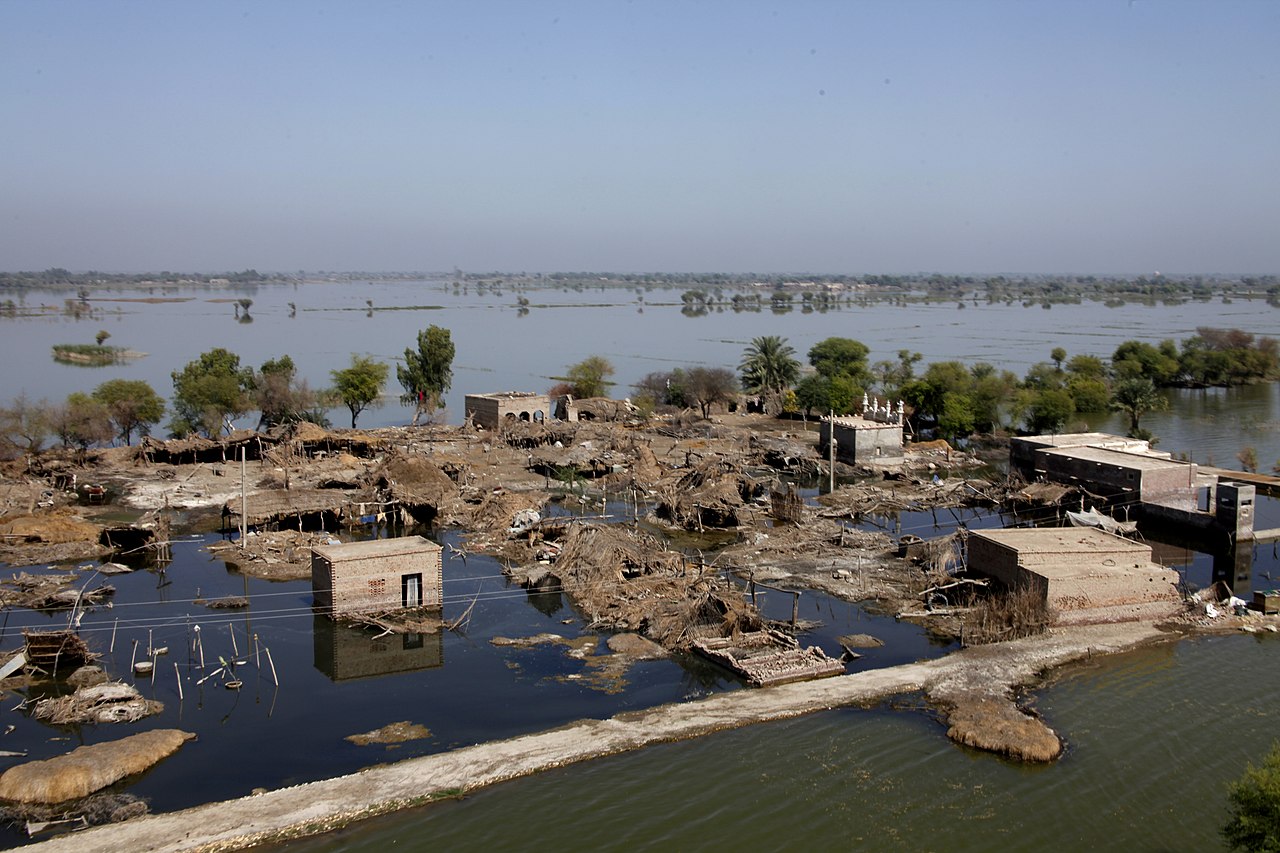
Water scarcity and drought are pressing global challenges that threaten societies, economies and ecosystems. Climate change is altering rainfall patterns, leading to more frequent and prolonged droughts that reduce the availability of surface and soil water. At the same time, water demand is rising due to population growth, agricultural intensification, industrial activity and energy production. Together, these factors intensify pressure on already limited water resources (Center for Climate and Energy Solutions 2025).

Water scarcity and drought are pressing global challenges that threaten societies, economies and ecosystems. Climate change is altering rainfall patterns, leading to more frequent and prolonged droughts that reduce the availability of surface and soil water. At the same time, water demand is rising due to population growth, agricultural intensification, industrial activity and energy production. Together, these factors intensify pressure on already limited water resources (Center for Climate and Energy Solutions 2025).

Local Perspectives Case Studies

Groundwater resource management using artificial intelligence and remote sensing technologies

Groundwater index maps for Bihar
Groundwater is a critical resource for drinking water, agriculture, and industry. With increasing anthropogenic activities and exponentially increasing population, groundwater in India is facing several challenges, related to quality as well as quantity, due to over-extraction, pollution, and climate change. Over-exploitation of groundwater may impact the availability and quality of groundwater which is not sustainable. Moreover, due to pollution in surface water, groundwater quality is also affected. In most of the cities of India, the quality of groundwater is below standard. Remote sensing and artificial intelligence can play a very vital role in monitoring the quantity as well as quality of groundwater. As, it is clear that presently no remote sensors can directly be used for groundwater observations, but by using surface features anomalies and gravity data obtained by various satellites, optimal groundwater management can be done using remote sensing. Space4water is one of the best communities addressing water related issues and work towards sustainable solutions. For the last three years, I am following this community, and I find that the community consists of scientists, NGO, policy makers etc. This combination has the potential to resolve issues related to any challenges related to social issues. I am looking for few global research partners who work for groundwater management using space technology. I am equally looking for data driven resource persons who can collaborate with me on real field conditions of various countries, related to groundwater management. What has been done so far is listed below: • Worked on GRACE satellite data and used it in field condition to study groundwater anomalies of few cities of India. • Developed spatio-temporal maps of Standardized Groundwater Index (SGI). • Worked on water quality of water bodies. • Used various satellite data to map water spread areas of various water bodies. • Worked on machine learning models to study in situ remediation of contaminated groundwater.

Space-based Solution

Harnessing rain: A system of safe, secure and sustainable drinking water - in development

The system involves a direct collection of rainwater into storage tanks. Implementing such a system has several challenges that a space-based GIS system can address comprehensively. The developed Rain4Drinking portal will be an opensource tool.

The model will be implemented in Google Earth Engine (GEE) and made available to communities through GEE App where they can just provide the shapefile of their rooftop or draw it on the interactive interface to get: