Data science

Data science combines the scientific method, math and statistics, specialized programming, advanced analytics, AI, and even storytelling to uncover and explain the business insights buried in data. Data science encompasses preparing data for analysis and processing, performing advanced data analysis, and presenting the results to reveal patterns and enable stakeholders to draw informed conclusions.(IBM Cloud Education 2020)
 

Sources

IBM Cloud Education. 2020. “Data Science.” IBM. 2020. https://www.ibm.com/cloud/learn/data-science-introduction.
 

Related Content

Article

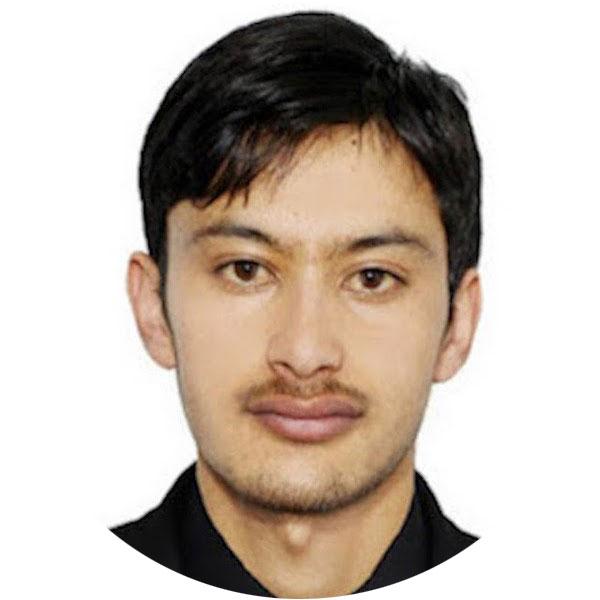
Interview with Sawaid Abbas, Assistant Professor at the Centre for Geographical Information, University of the Punjab, Lahore, Pakistan

Sawaid Abbas, Assistant Professor at the Centre for Geographical Information System, University of the Punjab, Lahore, Pakistan discussed his extensive work in addressing water-related challenges through the nexus between smart sensing and space technologies. His thematic focus spans water scarcity, food security, climate risks, and environmental monitoring with an emphasis on the Asia-Pacific region, including Pakistan and China. Key Sustainable Development Goals (SDGs) guiding his work include SDG2 (Zero Hunger), SDG13 (Climate Action), SDG15 (Life on Land), and SDG11 (Sustainable Cities and Communities).  Abbas's passion for water emerged during his early career at the World Wide Fund for Nature (WWF), where he was involved in Pakistan’s Wetland Program and witnessed the impact of water on associated ecosystems. This sparked his interest in understanding and managing water, forestry, and wildlife resources. He recently studied coastal ecosystems and their responses to climate and anthropogenic stressors in the Asia-Pacific region. The Living Indus – Investing in Ecological Restoration has become a new focus of interest for him, addressing sustainability challenges related to food security, river basin management, and efficient water use in alignment with the UN Decade of Ocean objectives.  Abbas shared his fascination with water, recognizing its complex and essential nature. He is captivated by its beauty in all forms and acknowledges its fundamental importance for life on Earth. This water connection further motivates his commitment to addressing global water challenges and promoting sustainable water use through innovative solutions.  Sawaid Abbas's work, stimulated by both professional commitment and personal fascination, stresses the critical role of space technologies, particularly earth observation, smart sensing nexus, and artificial intelligence in addressing water-related challenges. His research contributes to the development of innovative solutions for sustainable water use, environmental protection, and disaster response, aligning with global goals for a more resilient and water-secure future. 
Interview with Arjen Haag, Researcher and Consultant in hydrology and water management at Deltares

Arjen Haag is a hydrologist and remote sensing analyst working at the Operational Water Management & Early Warning department of Deltares. We talk to him about the role that earth observation plays in his projects, SERVIR-Mekong, his experiences in the space and water sector and his vision for innovation in the remote sensing community. We ask him about challenges related to flood mapping and forecasting, whether water data should be shared openly and the transfer of knowledge to those needing it the most. He shares his insights on the use of satellite data, algorithms and models, as well as artificial intelligence and machine learning. And finally, why sandcastles were important for all of this.

Interview with Sawaid Abbas, Assistant Professor at the Centre for Geographical Information, University of the Punjab, Lahore, Pakistan

Sawaid Abbas, Assistant Professor at the Centre for Geographical Information System, University of the Punjab, Lahore, Pakistan discussed his extensive work in addressing water-related challenges through the nexus between smart sensing and space technologies. His thematic focus spans water scarcity, food security, climate risks, and environmental monitoring with an emphasis on the Asia-Pacific region, including Pakistan and China. Key Sustainable Development Goals (SDGs) guiding his work include SDG2 (Zero Hunger), SDG13 (Climate Action), SDG15 (Life on Land), and SDG11 (Sustainable Cities and Communities).  Abbas's passion for water emerged during his early career at the World Wide Fund for Nature (WWF), where he was involved in Pakistan’s Wetland Program and witnessed the impact of water on associated ecosystems. This sparked his interest in understanding and managing water, forestry, and wildlife resources. He recently studied coastal ecosystems and their responses to climate and anthropogenic stressors in the Asia-Pacific region. The Living Indus – Investing in Ecological Restoration has become a new focus of interest for him, addressing sustainability challenges related to food security, river basin management, and efficient water use in alignment with the UN Decade of Ocean objectives.  Abbas shared his fascination with water, recognizing its complex and essential nature. He is captivated by its beauty in all forms and acknowledges its fundamental importance for life on Earth. This water connection further motivates his commitment to addressing global water challenges and promoting sustainable water use through innovative solutions.  Sawaid Abbas's work, stimulated by both professional commitment and personal fascination, stresses the critical role of space technologies, particularly earth observation, smart sensing nexus, and artificial intelligence in addressing water-related challenges. His research contributes to the development of innovative solutions for sustainable water use, environmental protection, and disaster response, aligning with global goals for a more resilient and water-secure future. 

Interview with Arjen Haag, Researcher and Consultant in hydrology and water management at Deltares

Arjen Haag is a hydrologist and remote sensing analyst working at the Operational Water Management & Early Warning department of Deltares. We talk to him about the role that earth observation plays in his projects, SERVIR-Mekong, his experiences in the space and water sector and his vision for innovation in the remote sensing community. We ask him about challenges related to flood mapping and forecasting, whether water data should be shared openly and the transfer of knowledge to those needing it the most. He shares his insights on the use of satellite data, algorithms and models, as well as artificial intelligence and machine learning. And finally, why sandcastles were important for all of this.

Event

Stakeholder

University of Birmingham: Resilient Systems and Climate Action Group

The University of Birmingham, a leading global research university in the United Kingdom, is renowned for its multidisciplinary expertise in addressing complex global challenges. With a strong commitment to sustainability and innovation, the University conducts pioneering research in water resources, climate resilience, and satellite technology applications.

Mozaika

Mozaika, The Humanizing Technologies Lab, provides research and development in the field of data science, natural interfaces (human-computer interaction), knowledge management and human insight. At Mozaika we are trying to leverage data science with natural interfaces to provide solutions tailored to human behavior, attitudes and comprehension. The company specializes in building information infrastructures that serve a variety of applications in data as a service or intelligence as a service modes. Our solutions are either human user facing or modules of larger systems.

Person